
At this UK Wedding Association Educational & Networking Event, employment law specialist Beverley Sunderland, Founder of Crossland Employment Solicitors, and Lee Clubb-Sansom, CEO of Sarah Haywood Exceptional Celebrations, shared practical guidance on the legal and leadership considerations involved in building and managing successful teams.
The session explored employment law updates, recruitment, workplace culture, team development and leadership, providing practical advice for businesses of every size, from sole traders working with freelancers to larger organisations managing permanent teams.
You can watch the full session below:
Meet the Speakers
Beverley Sunderland – Crossland Employment Solicitors
Beverley Sunderland is the Founder of Crossland Employment Solicitors and one of the UK’s leading employment lawyers. Having established her own firm more than 18 years ago, Beverley advises businesses of all sizes on employment law, HR, workplace policies and dispute resolution, helping employers navigate an increasingly complex legal landscape.
Lee Clubb-Sansom – Sarah Haywood Exceptional Celebrations
Lee Sansom is CEO of Sarah Haywood Exceptional Celebrations, one of the world’s leading luxury wedding planning companies. With experience spanning retail, recruitment and luxury events, Lee specialises in leadership, people development and business operations, helping build high-performing teams that deliver exceptional client experiences.
Section 1. Legal Updates from Crossland Employment Solicitors
1. Understand Who Is Working For Your Business
Many wedding businesses rely on a combination of employees, freelancers, casual staff and contractors. However, simply describing someone as a freelancer does not determine their legal status.
In reality, individuals generally fall into one of three categories:
- Employees
- Workers
- Independent contractors
Each has different legal rights and responsibilities, making it essential that businesses understand the true nature of each working relationship and have appropriate contracts and documentation in place.
Taking the time to establish this correctly from the outset can help avoid costly disputes later.
2. Employment Law Continues To Evolve
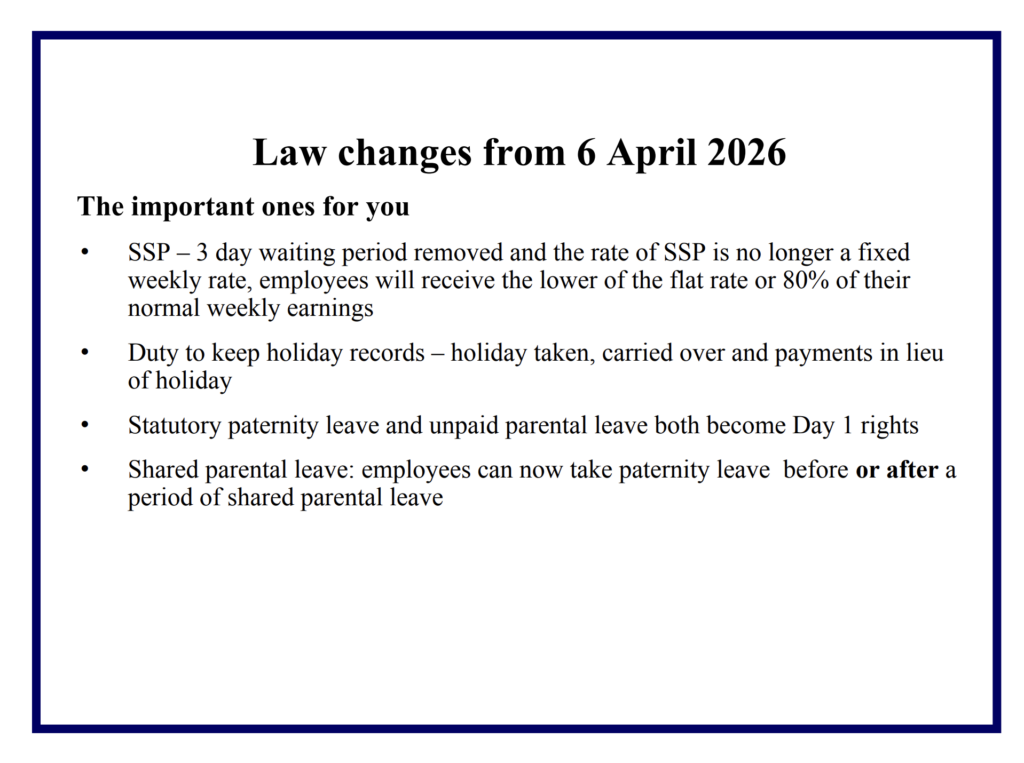
Employment legislation continues to change, and businesses should regularly review their policies and working practices to remain compliant.
The session highlighted a number of important developments, including:
- Statutory Sick Pay changes
- Holiday record requirements
- Flexible working reforms
- Bereavement leave
- Changes affecting zero-hours contracts
- New unfair dismissal rules expected in 2027
Even small businesses working with seasonal staff or freelancers should ensure they understand how legislative changes may affect their responsibilities.
3. Preventing Sexual Harassment Requires A Proactive Approach
Employers have a legal duty to take reasonable steps to prevent workplace sexual harassment, with further strengthening of these requirements expected.
For wedding businesses, where employees and freelancers often work in environments involving alcohol and large numbers of guests, planning ahead is particularly important.
Practical steps include:
- Carrying out workplace risk assessments
- Having clear policies in place
- Training employees and freelancers
- Identifying a responsible person at events to deal with concerns
- Ensuring staff know how and where to report inappropriate behaviour
Creating a culture where concerns can be raised quickly and dealt with appropriately helps protect both individuals and the business.
4. AI-Generated Grievances
Artificial intelligence is creating new opportunities, but also new challenges for employers.
The session highlighted how AI-generated grievances and complaints are becoming increasingly common. These documents often appear highly professional and contain legal terminology or case law, despite not always being accurate or fully understood by the individual submitting them.
AI is also changing recruitment. CVs, covering letters and even online interviews may now be heavily supported by AI tools, making it more important than ever to assess candidates through meaningful conversations rather than relying solely on written applications.
While AI can improve efficiency, it should support decision-making rather than replace professional judgement.
5. Know When To Seek Professional Advice
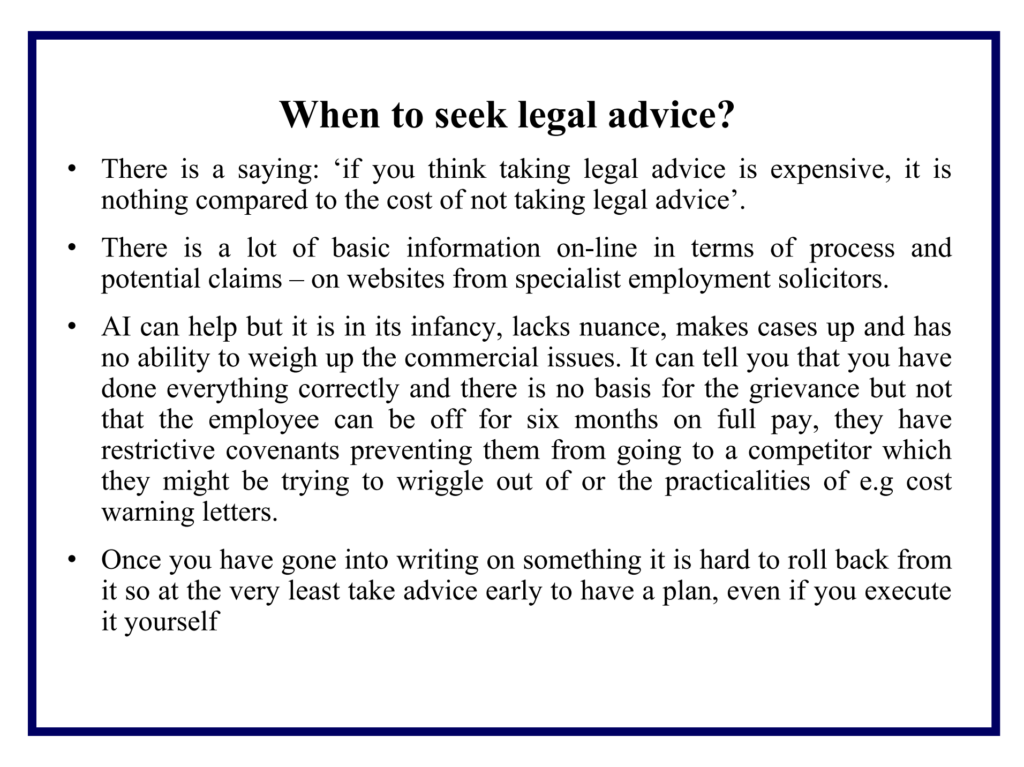
Employment issues rarely become easier once they have escalated.
Seeking legal advice early can often prevent small issues becoming expensive disputes, particularly before formal letters, disciplinary action or dismissals are initiated.
Professional advice also provides commercial guidance that AI and online templates cannot, helping businesses weigh legal risk alongside practical business considerations.
Section 2. High Performance Teams
1. Recruit For Attitude As Well As Experience
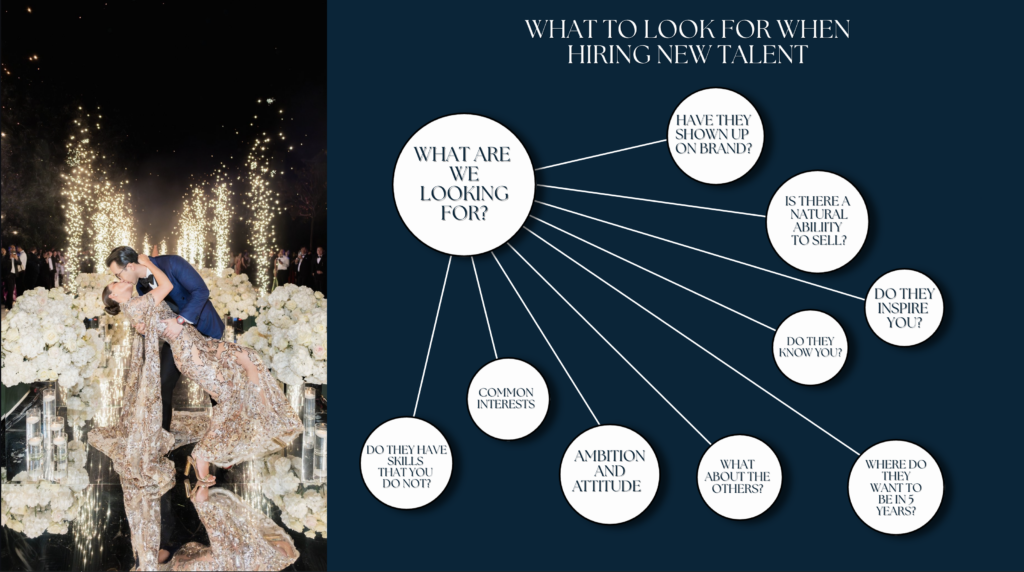
Experience alone does not always predict success.
Businesses should look beyond CVs and consider qualities that are much harder to teach, including:
- Passion
- Curiosity
- Communication skills
- Cultural fit
- A willingness to learn
Technical skills can often be developed over time, but attitude, enthusiasm and alignment with a business’s values are far more difficult to instil.
Recruitment should focus on finding people who genuinely understand the business and want to contribute to its long-term success.
2. Strong Brand Values Build Strong Teams
Clear brand values help shape every aspect of a business, from recruitment and onboarding to decision-making and leadership.
The session explored a simple framework for developing meaningful values based around three key areas:
- People – how you treat clients, colleagues and suppliers.
- Products or services – what you deliver and the experience you want clients to receive.
- Production – how your business operates and where you want it to grow.
When people understand what a business stands for, they are more likely to feel connected to its purpose and contribute positively to its culture.
3. Invest In Your People
Recruitment is only the beginning.
Supporting employees and freelancers through structured development helps improve engagement, retention and performance.
Examples include:
- Regular probation reviews
- Personal development plans
- One-to-one meetings
- Coaching and mentoring
- Team-building activities
- Ongoing training opportunities
Providing people with opportunities to learn and develop benefits both the individual and the business.
4. Address Problems Early
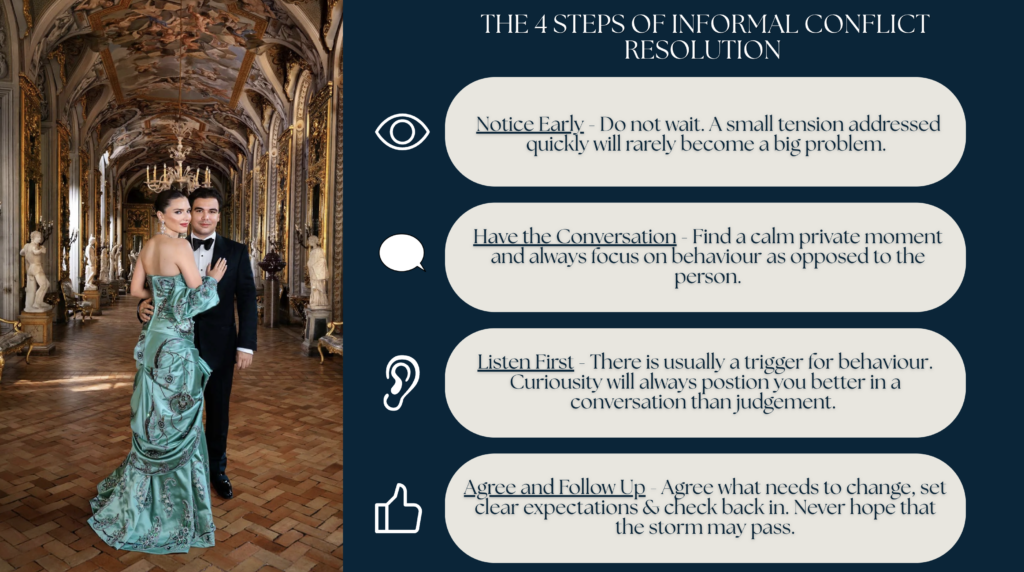
Small issues rarely resolve themselves.
Dealing with concerns early through open and honest conversations often prevents them becoming formal HR issues.
When handling concerns, it is helpful to:
- Notice changes in behaviour early
- Speak privately and calmly
- Focus on behaviours rather than personalities
- Listen before making assumptions
- Keep brief notes of conversations
- Escalate formal procedures only where necessary
Addressing concerns promptly helps build trust while maintaining clear expectations across the team.
5. Great Leaders Continue To Develop Themselves
Running a wedding business can be demanding, and leadership often comes with significant responsibility.
Supporting a team also means investing in your own development.
This may include:
- Building a trusted peer network
- Continuing professional development
- Learning new skills
- Finding interests outside work
- Prioritising wellbeing
Looking after yourself ultimately enables you to better support your team and your business.
Key Takeaway
Building a successful team requires more than hiring talented people. Sustainable business growth depends on combining strong legal foundations with effective leadership, clear values and ongoing investment in people.
Whether you work with freelancers, employ a growing team or are planning your first hire, taking time to establish good employment practices, recruit carefully and create a positive workplace culture will help build a resilient business that is well equipped for future growth.
Resources Referenced During The Session
Beverley’s Slides. For further information and support, contact: Crossland Employment Solicitors
Lee’s Slides.
Employment Review and Development checklist
Recruitment- Things to look for when meeting Candidates
ACAS
Equality and Human Rights Commission (EHRC)
Equality Act 2010
HMRC
Our thanks to Beverley Sunderland of Crossland Employment Solicitors and Lee Clubb-Sansom of Sarah Haywood Exceptional Celebrations for delivering such an informative and practical session for UK Wedding Association members.