
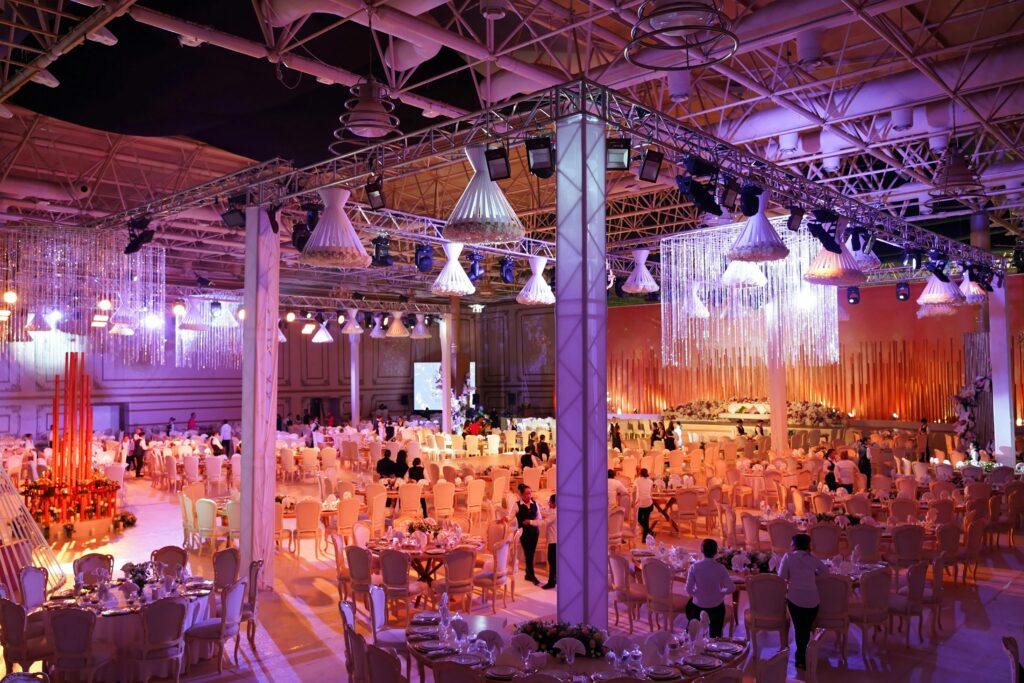
Event production has become an increasingly important part of modern weddings. From lighting and sound to staging, power, technical planning and room transformation, production companies now play a significant role in shaping both the guest experience and the smooth delivery of the day itself.
For wedding planners and venues, however, knowing when to involve a production company, what to ask them, and how to assess whether they are the right fit can sometimes feel unclear.
This guide answers some of the most common questions planners and venues have about working with production teams, and explains how thoughtful production support can strengthen both operations and guest experience.
What Does a Wedding Production Company Actually Do?
A production company manages the technical and environmental elements that help bring a wedding or event to life.
This can include:
- Lighting design
- Sound systems and audio management
- Staging and dancefloors
- Power distribution
- Scenic installations
- Rigging and structural elements
- Technical management.
Their role is not simply to “add effects” to a wedding. In reality, strong production is often about creating an atmosphere that feels seamless, polished and aligned with the couple’s vision, without guests necessarily noticing the technical detail behind it.
When Should a Planner or Venue Bring in Production Support?
One of the biggest misconceptions is that production is only necessary for large celebrity weddings or luxury marquee builds.
In reality, production support can add value across a wide range of wedding styles, particularly when there are:
- Multiple spaces being used throughout the day
- Complex room turnarounds
- Outdoor ceremonies
- Live entertainment
- Large guest numbers
- Bespoke styling concepts
- Cultural or multi-day celebrations
- Blank canvas or marquee venues
Involving production teams early often allows logistical challenges to be identified sooner, helping avoid last-minute compromises or technical issues.
What Questions Should Venues Ask a Production Company?
For venues building preferred supplier relationships or hosting external production teams, there are several important operational questions worth asking:
Have they worked in similar venues before?
Historic venues, private estates, marquees and modern blank canvas spaces all come with different technical considerations. Experience within similar environments can help reduce risk and improve efficiency on the day.
How do they approach power and technical planning?
Power management is one of the most overlooked aspects of weddings, especially with live entertainment, catering, lighting and production all drawing from venue infrastructure simultaneously.
A good production company should be able to advise clearly on load requirements, backup plans and safe distribution.
How do they work alongside other suppliers?
The best production teams operate collaboratively, not independently. Weddings rely on strong communication between planners, florists, caterers, entertainment teams and venues. Production should support the wider delivery, not dominate it.
Do they offer on-site technical management?
Having experienced technicians present throughout the wedding can help troubleshoot issues quickly and manage transitions smoothly, particularly during room reveals, speeches and entertainment changeovers.
What Should Wedding Planners Look For?
For planners, technical expertise matters, but so does temperament and communication style.
Weddings are emotional, fast-moving environments with constantly evolving priorities. Production teams that remain calm, adaptable and solutions-focused can make a huge difference behind the scenes.
Planners should also assess:
- Responsiveness during the planning phase
- Willingness to collaborate creatively
- Transparency around costs and logistics
- Experience managing complex schedules
- Understanding of guest experience, not just technical delivery
The strongest production partnerships often feel like an extension of the wider planning team rather than an external supplier.
How Does Production Improve Guest Experience?
Many guest experience improvements happen subtly through production.
Clear audio ensures guests remain engaged during ceremonies and speeches. Lighting transitions can naturally guide the mood of the day from intimate ceremony to energetic evening celebration. Well-designed dancefloors and staging can influence how guests interact with the space itself.
When done well, production helps events feel immersive and effortless rather than overly staged or theatrical.
This balance is increasingly important as couples continue prioritising experience-led weddings that feel personal, emotionally engaging and thoughtfully designed.
Why Collaboration Matters More Than Ever
Exceptional weddings are rarely created by one supplier alone.
Production works best when integrated into the wider planning process alongside florists, caterers, designers, venues and entertainment teams from an early stage. This allows creative ideas and logistical realities to evolve together rather than separately.
For venues, this often means smoother operational delivery. For planners, it creates greater confidence that the creative vision can be achieved practically and professionally.
Ultimately, the role of production is not simply technical. It is about helping create environments, transitions and experiences that allow couples and guests to remain fully immersed in the celebration.
This article includes insights supplied by Wise Productions, specialists in technical event production for weddings, private celebrations and luxury events. Their contribution helped inform the operational and experiential considerations discussed throughout this piece.