
With the recent changes in Downing Street, Business Rates have been thrust into the limelight once again. The announcement of 20% business rates relief for pubs from next April, along with suggestions that this may be extended further, has been joined by commencement of a review into valuation methods for pubs and hotels in the future.
We consider both the longer term and shorter term implications and opportunities, with specific regard to wedding venues.
A Call for Evidence
The Government has recently published a ‘Call for Evidence’ on Business Rates in relation to public houses and hotels, which seeks to examine whether the “current valuation approaches fully reflect market practice, are representative of market conditions, are applied consistently and are sufficiently transparent to those affected.”
Whilst the investigation is specifically targeted at public houses and hotels, it will have varying levels of influence on some wedding venues, but nevertheless, it provides an opportunity for the UK wedding sector to explain some of the unique challenges it faces.
Many hotels have rateable values which are based on a notional value per double bed unit, derived from the analysis of rents and accounts of a selection of hotels, but having reference to the individual facilities of the hotel, the location, the average room rate and the additional services and facilities which may or may not be provided. Larger hotels may be individually valued at a percentage of annual receipts based on an analysis of occupancy rates and service provision.
So there is a valuation framework in place which has some regard to actual trade, but also a high level of hypothetical trade. However, it is important to remember that Business Rates are a property tax and therefore there is often a risk that the occupier or the business is being valued, rather than the property.
Pubs tend to be valued in relation to an estimate of ‘fair maintainable trade’. The intention is again to value the property and not the business, so actual trade can provide an indication of whether a rateable value is right or wrong, but the valuations should not be personal.
This current consultation is to gather ideas in relation to pubs and hotels in advance of the next Business Rates revaluation of all commercial properties in England and Wales. This may therefore influence the levels of rateable values to go live from 1 April 2029, which will be based on rents or accounts at or around 1 April 2027.
This is therefore not an immediate lifeline of any sort, but could help to shape a property’s tax liability from 2029 into the future.
The questions the Call for Evidence is asking are divided between pubs and hotels and includes queries around what valuation method would be better suited for each sector, whether trade evidence could be collected more efficiently and whether ratepayers are provided with enough information to be able to understand their valuations.
From a Business Rates expert’s point of view, this does not really fill us with confidence that the right questions are being asked, but it is important to provide a response, even if part of that response is to point out that the questions are inadequate and that the Call for Evidence should reach further.
Hotels or pubs which offer wedding facilities, with or without accommodation, are clearly affected by this directly, so views specifically in relation to the difficulty of achieving and maintaining revenue are relevant and could include factors such as whether past performance is an indication of future performance; whether trade is seasonal or consistent throughout the year; how profitability may change throughout the seasons and what property types or locations may be more susceptible to change; and whether the nature of weddings means that pre-booking gives an element of resilience to any of the above, or whether pre-booking makes it more difficult to absorb fluctuating costs.
Along with the narrative on the above, the next question is how an interpretation of trade evidence can be more effectively presented to the Valuation Office Agency, bearing in mind the size of the task of valuing just over 2 million properties every 3 years.
As the current valuation methods focus on turnover, rather than net profitability, changes in trading conditions and margins over the years should be of interest too.
A further concern for the wedding industry is that many specialist wedding venues are valued as function facilities, country houses, event venues, attractions or mixed-use properties rather than pubs or hotels. As a consequence, and as this review is focussed on pubs and hotels, it may not fully address valuation issues affecting a significant proportion of the wedding sector.
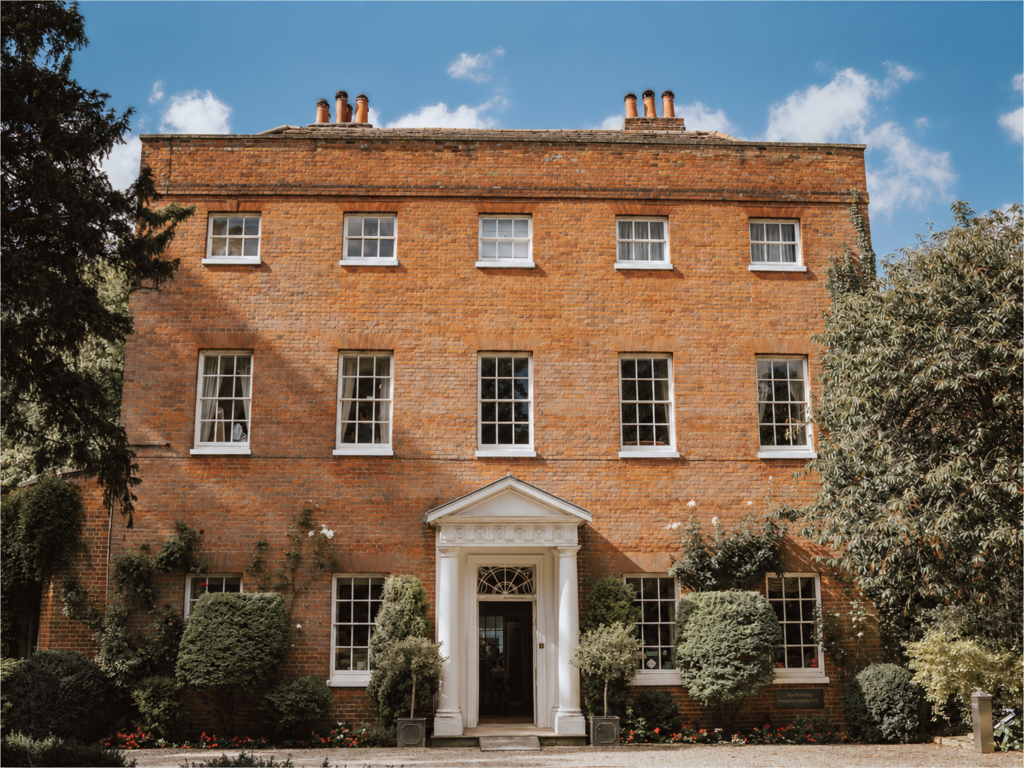
“As a small independent business in the Essex countryside we will see our rates for the next financial year increasing to £74.6k per year. That’s a £24.6k increase year on year, if the government doesn’t extend the RHL relief beyond public houses again next year.”
Richard Kidner, General Manager, Mulberry House
Similarly, many properties, including country houses, barns or farm diversification, are used infrequently for wedding functions. The risk is that this could tip a domestic or agricultural property into business rates territory. Properties with an alternative primary use could also face mixed valuation methods where income from wedding functions is added. This can cause complications and unnecessary additional business rates liability.
So a means of providing information with a clear explanation of past, current and anticipated future usage, along with net profitability, would be helpful.
We would urge any UK Wedding Association members with a view to either consider responding directly to the Call for Evidence by the deadline of 16 October 2026, or to provide any comments to Savills who will be happy to collate responses and provide an overview for the UK Wedding Association to present to HM Treasury as part of the Call for Evidence.
What Will the 2026 Budget Provide?
In the meantime, with a new and untested Prime Minister and Chancellor pairing, and with the next Business Rates revaluation not coming into effect until 1st April 2029, the hospitality sector has plenty to be concerned about over the next two years in relation to Business Rates.
For those who don’t know how Business Rates work, every commercial property in the UK is given a rateable value at each new revaluation (currently 3 yearly) which is supposed to represent a property’s annual rental value on the open market at a specified valuation date. So current rateable values, which took effect from 1st April 2026 are supposed to represent a property’s open market rental value as at 1 April 2024.
The government then sets a multiplier which is applied to a rateable value to give an annual amount which is paid to the local authority. The multiplier paid depends on location (England, Wales, Scotland or London), size of rateable value and whether the property is in retail, hospitality or leisure use.
In the current 2026/27 business rates year, RHL properties receive around 13% discount in England for properties with a rateable value up to £500,000; 43% in Wales for properties up to £51,000; and 15% in Scotland for properties up to £100,000.
Subsequent steady reduction in the amount of relief given seems to have been ill timed and is clearly causing hardship.
The former Chancellor recognised this for pubs and introduced a further 15% discount for the current rate year, whilst the new Prime Minister has signalled an additional 20% discount from 1st April 2027 for pubs and certain live music venues, provided they have a bar at which you can stand and drink.
Commentators such as Savills have said that this is not enough, either in terms of the amount of discount or the restriction on what it applies to.
Andy Burnham states that he wants to protect communities, but drinking at a bar is a poor definition of community.
The problem with extending the definition is one of cost. The new PM has said that the bill of circa £100m to offer the additional 20% relief to pubs will be funded by taxing vape shops and clamping down on VAT for certain online market places.
Further comments have been made by the Government recently to suggest that the new Chancellor will introduce further relief to protect our High Streets, but it is unclear how far this will apply or how it will be funded.
With the Autumn Statement not due until 28th October, where does this leave us in terms of what rates bills might look like next year? The basic multiplier should rise by September’s CPI figure, which will be published on the 21 October. Any changes in the reliefs or supplements applicable to individual properties will then be announced in the Budget on 28 October. Therefore, accruing for next year’s rates bills is difficult to do with any accuracy at this stage.
Recommended action points
In the meantime, there are actions which can be taken to reduce an annual liability, sometimes retrospectively. Our recommended action points include the following:
- Check your business rates bills very carefully as errors in bills are unfortunately quite commonplace.
- Check whether the property description and physical details held by the VOA are correct. Errors relating to floor areas, accommodation, facilities, trading assumptions or the extent of occupation can materially affect a rateable value.
- Take advice on your level of rateable value, but remember that rateable values can go up as well as down.
- As the current appeal system appears to be designed to make it difficult to ‘win’, and one consequence of not pursuing the procedures correctly is a blunt loss of the right to try to correct an error in a rateable value, we would recommend that you take advice before challenging your rateable value.
- Ensure that all mandatory reliefs are claimed, retrospectively and ongoing, but be careful not to overclaim as this could be clawed back retrospectively if any breach is subsequently discovered.
- Be aware of any discretionary reliefs available, which could include improvement relief (where improvements are made to a property whilst part of the property remains occupied), certain green improvements and the exemption applicable to electric vehicle charging points.
If you have any queries on your business rates or would like further advice on challenging your rateable value, please do contact the Business Rates team at Savills, who are highly experienced in advising wedding venues.
David Parker
Director & National Head of Rating
[email protected]
Polly Graham
Associate Director
Leisure & Trade Related Property
[email protected]
Respond to the Call for Evidence
Completion deadline is 16th October, so act now using the link below:
Respond to the Business Rates Review of Valuation Methodology for Public Houses and Hotels
If you are not already a member of the UK Wedding Association now is the time to join.
We are a not for profit, supporting venues and wedding suppliers by sharing information and education through a committed network of experts.