

The Government is consulting on the biggest proposed reform of weddings law in England and Wales for almost 200 years.
If introduced, the changes could reshape how weddings are legally conducted, creating new opportunities for venues, celebrants, planners and suppliers, while introducing a completely new legal framework for officiating weddings.
The deadline for submitting feedback is Thursday 24 September 2026.
The proposals:
Feedback form:
Industry Briefing on Law Reform
UK Wedding Association Chair Alison Hargreaves moderated an industry roundtable at Old Marylebone Town Hall on 7 September 2026, bringing together humanist and independent celebrants, registrars and local authority representatives, alongside the Ministry of Justice. The discussion focused on the practical and commercial implications of the proposed reforms, including areas where further clarification, guidance or industry consensus will be needed.
Alison then shared the key insights from the roundtable in a UK Wedding Association webinar on 22 September 2026, explaining what the proposals could mean in practice for celebrants, venues, registration services and the wider wedding industry.
Key Changes Being Proposed
The proposed reforms would fundamentally change how legal weddings operate in England and Wales. The central change is a move away from the current system, where the building is regulated, towards an officiant-based system, where the person responsible for overseeing the legal marriage carries greater responsibility for ensuring the ceremony complies with the law. The Government is also proposing a more consistent set of rules across various types of wedding.
A move from approved venues to authorised officiants: Under the proposed system, weddings would no longer need to take place in premises approved by a local authority. Instead, the officiant would have legal responsibilities around the ceremony, including ensuring that legal consent is freely given and that the ceremony and location meet the required safety and dignity standards. For venues, this means being licensed for civil ceremonies would no longer provide the same point of distinction it does today. However, it could also allow existing venues to use areas that cannot currently be licensed and enable new types of venue to enter the wedding market.
Independent celebrants could become authorised officiants: The Government’s current position is that independent officiants should be permitted to conduct legally binding weddings, subject to authorisation, training, monitoring and regulation. Non-religious belief organisations, including Humanists, would also be able to nominate officiants to conduct legal weddings. This could mean that many couples who currently have a short legal ceremony followed by a separate personalised ceremony could eventually have one ceremony that is both meaningful to them and legally binding.
The role of the officiant would carry significant legal responsibility: An authorised officiant would not simply be a celebrant who is now allowed to sign the paperwork. The proposals envisage officiants being responsible for ensuring the legal requirements of the ceremony are met, confirming that valid consent is expressed and applying the new dignity framework. The Government is also consulting on a “fit and proper” test, training requirements, monitoring, complaints and sanctions for officiants who fail to meet the required standards.
The way couples express consent could become more flexible: For civil ceremonies, the proposal is to retain a short form of verbal consent, with flexibility for words to the same effect. For religious and non-religious belief ceremonies, consent could potentially be expressed through recognised actions or rituals rather than prescribed wording. This was highlighted during the webinar as an important distinction between different types of officiant and ceremony.
A new dignity framework would apply to ceremonies and locations: The officiant would need to be satisfied that the wedding upholds the dignity and significance of marriage. This is intended to give couples greater freedom while maintaining appropriate standards. The roundtable highlighted that this will need clear guidance in practice, particularly because ceremonies can vary considerably across cultures, beliefs and styles, and because officiants may sometimes need to make difficult judgement calls.
Couples could marry in a much wider range of locations: The current requirement for many weddings to take place in approved premises would be removed, as would the existing “open doors” requirement. The consultation explores weddings in private homes, gardens, on inland and coastal waters and on UK-registered cruise ships in international waters, subject to the appropriate legal, safety and dignity requirements.
Venues could choose voluntary pre-authorisation: Although venues would no longer have to be approved in the way they are now, the Government is consulting on a voluntary pre-authorisation scheme. This could allow established venues to demonstrate in advance that they meet the necessary safety and dignity standards, reducing the need for repeated assessments by different officiants. It is assumed that an officiant would still retain discretion to assess the venue where necessary.
The legal preliminaries would change: The proposed two-stage system would separate the administrative process from the safeguarding interview. Couples would initially provide information online and would then attend an in-person interview with the registration service. The intention is to allow registrars to focus more closely on consent, capacity and the identification of forced, predatory and sham marriages. Registration services therefore remain an important part of the proposed system even though responsibility for the ceremony itself would become more widely distributed.
Officiants would be regulated and conflicts of interest would need to be managed: The consultation proposes entry requirements, training and monitoring, with the possibility of oversight being shared between a central regulator and approved nominating or membership organisations. Independent and maritime officiants would also be subject to conflict-of-interest rules. This has particular relevance for venues considering employing their own officiant or businesses combining officiating with other commercial wedding services.
Taken together, the proposals are intended to offer couples significantly greater choice over where they marry, who conducts their ceremony and what that ceremony looks like, while transferring substantial responsibility onto the professionals authorised to oversee legal marriages.
Key Takeaways from the Webinar
The webinar went beyond the proposals themselves, drawing on the roundtable discussion to explore how the reforms could work in practice and where important questions remain for wedding businesses.
Nothing has changed yet, and there is no confirmed implementation date. This was one of the strongest messages from both sessions. Current marriage law remains in place and businesses should continue to work within the existing system. At the roundtable, the Ministry of Justice explained that legislation would still need to go through Parliament and would then require an implementation period, including time to establish systems, regulation and training. The Government’s published position remains that legislation will be introduced when parliamentary time allows. Businesses should therefore be particularly cautious of anyone presenting a speculative date as confirmed.
The current consultation closes on 24 September 2026, giving wedding businesses a final opportunity to respond on the areas relevant to their experience.
The future role of a celebrant who becomes an officiant will be very different from conducting a symbolic ceremony today. The webinar emphasised that the officiant would have responsibility for confirming legal consent and applying the dignity framework, as well as being an additional safeguard against sham or forced marriages. Registrars at the roundtable highlighted the level of legal knowledge currently required when unexpected information comes to light on a wedding day. The consensus was that future officiants need to understand not only how to deliver a good ceremony, but also the law and safeguarding responsibilities attached to it.
Training remains one of the biggest unanswered questions. There was broad agreement at the roundtable that there needs to be a common minimum standard covering the legal elements of the officiant role, including safeguarding, forced, predatory and sham marriage, consent and the dignity framework. However, there was much less agreement over exactly what form that training should take. Existing Level 3 qualifications were discussed, but participants also questioned whether current qualifications are sufficiently up to date for the new legal responsibilities. Another option discussed was a common legal module similar to the training required within registration services, with different celebrant training organisations continuing to provide their own additional ceremony training.
This leads to an important message for the industry: no current qualification can yet be described as the guaranteed route to becoming a legal officiant. The webinar reported unanimous agreement from the roundtable that it is misleading for a celebrant to claim they will definitely be able to conduct legal weddings in future, or for a training provider to say that completing their course will guarantee future authorisation. The requirements simply have not been finalised.
Ongoing professional development is also likely to be an important consideration. Registrars at the roundtable described the regular training and updates they currently receive and raised concerns about relying on a qualification completed several years previously, particularly where an officiant may only conduct a small number of marriages. Participants discussed continuing professional development and refresher training as possible ways to ensure officiants remain confident and up to date, although the final requirements are still to be decided.
Family- or friend-led ceremonies may still have a place. The webinar considered the “Uncle John” scenario: a couple wants a family member or friend to lead the personal ceremony rather than a professional celebrant. The expectation discussed was that this type of ceremony could continue, with an authorised officiant present to oversee the legal requirements and confirm that legal consent has been correctly given. The exact operating model has not yet been finalised, but the discussion illustrates that officiating the legal marriage and leading every element of the ceremony may not necessarily have to be the same role.
For venues, reform creates opportunities as well as competition. More pubs, restaurants, farms, private properties and other locations could potentially host legal weddings. At the same time, established wedding venues already offer much of what couples need beyond the legal ceremony: infrastructure, weather contingency, catering, guest facilities, parking, experienced teams and the ability to manage an entire wedding day. The roundtable discussion did not support the idea that couples being able to marry in more places automatically removes the need for dedicated venues.
The practical advice from the webinar was therefore not to panic or immediately reduce prices. Venues were encouraged to review what makes them commercially distinctive, consider areas of the property that could become usable for ceremonies and be aware that additional competition may be felt particularly on quieter or midweek dates. Established venues should make sure their market position is clear before new entrants begin competing for the same couples.
Building relationships with celebrants should become a greater priority for venues. The webinar recommended developing relationships with a broad range of celebrants rather than selecting one exclusive “recommended celebrant”. Personality and ceremony style are significant parts of a couple’s decision, so restricting choice could work against the purpose of the reforms. Celebrants can also become valuable referral partners and advocates for venues they know and trust.
Venues may be able to employ their own officiants, but there are important complications. This was raised repeatedly by venues and was discussed in detail at the roundtable. The group did not identify a clear reason why a venue-employed officiant should automatically be prohibited, provided they meet exactly the same authorisation and training requirements. However, it creates an obvious potential conflict: if an officiant believes a marriage cannot legally proceed or that the dignity requirements have not been met, they must be able to make that decision even where cancelling the ceremony has significant financial consequences for their employer. Any future model would therefore need appropriate protections and must still allow meaningful choice for couples.
Registration services would remain central to the legal process, but their commercial role could change. The proposed preliminaries would continue to be managed through registration services, and registration officers would still be able to conduct ceremonies. The roundtable also explored whether register offices and town halls could in future make their spaces available to couples who want to bring in another authorised officiant. That could create opportunities for closer collaboration, but it would also require individual registration services to look carefully at staffing, pricing and how they recover the cost of their buildings and services.
Greater choice should not automatically be interpreted as cheaper weddings. The roundtable spent considerable time discussing the current statutory ceremony and the difficulty some registration services have in providing it at the nationally set price. Participants drew an important distinction between the cost of the legal marriage and the cost of the wider wedding celebration. Reform may remove the need for some couples to pay for one legal ceremony and a second personalised ceremony, and the market may eventually offer a wider range of ceremony options. However, the key benefit being discussed is choice rather than a guarantee that every wedding will cost less.
There is also no confirmed proposal to cap what independent officiants could charge. Participants at the roundtable felt that a single fee would be difficult because the amount of preparation and personalisation can vary considerably between ceremonies. Pricing remains one of the details that will need to develop alongside the final regulatory framework.
Contracts, insurance and liability will need careful attention. An officiant could potentially find themselves having to stop a wedding because there is a concern about consent, a legal discrepancy or a problem with the proposed ceremony or location. The roundtable highlighted the financial consequences this could have for the couple, venue and suppliers, as well as questions about professional indemnity insurance and contractual protection. Businesses do not yet have enough information to rewrite everything around the proposed system, but these are areas that celebrants, venues and professional bodies should be preparing to review once responsibilities are clearer.
For businesses generally, the message is prepare, but don’t over-invest. Review your positioning, build relevant referral relationships, make sure your business remains visible and think through where the reforms could create opportunities. But avoid investing heavily in speculative training, changing your entire operating model or making promises to couples until the final requirements are known. Above all, communicate carefully: a venue cannot yet claim to be “future-proofed”, a celebrant cannot guarantee future legal status and a training provider cannot guarantee that a particular current qualification will be the one required
When will changes take effect?
The simple answer is that, as of September 2026, no one knows. The following timeline sets out the various stages before possible implementation. It demonstrates the number of variables, and the reason that no one – including the Ministry of Justice – currently knows the date that any new laws might come into effect.
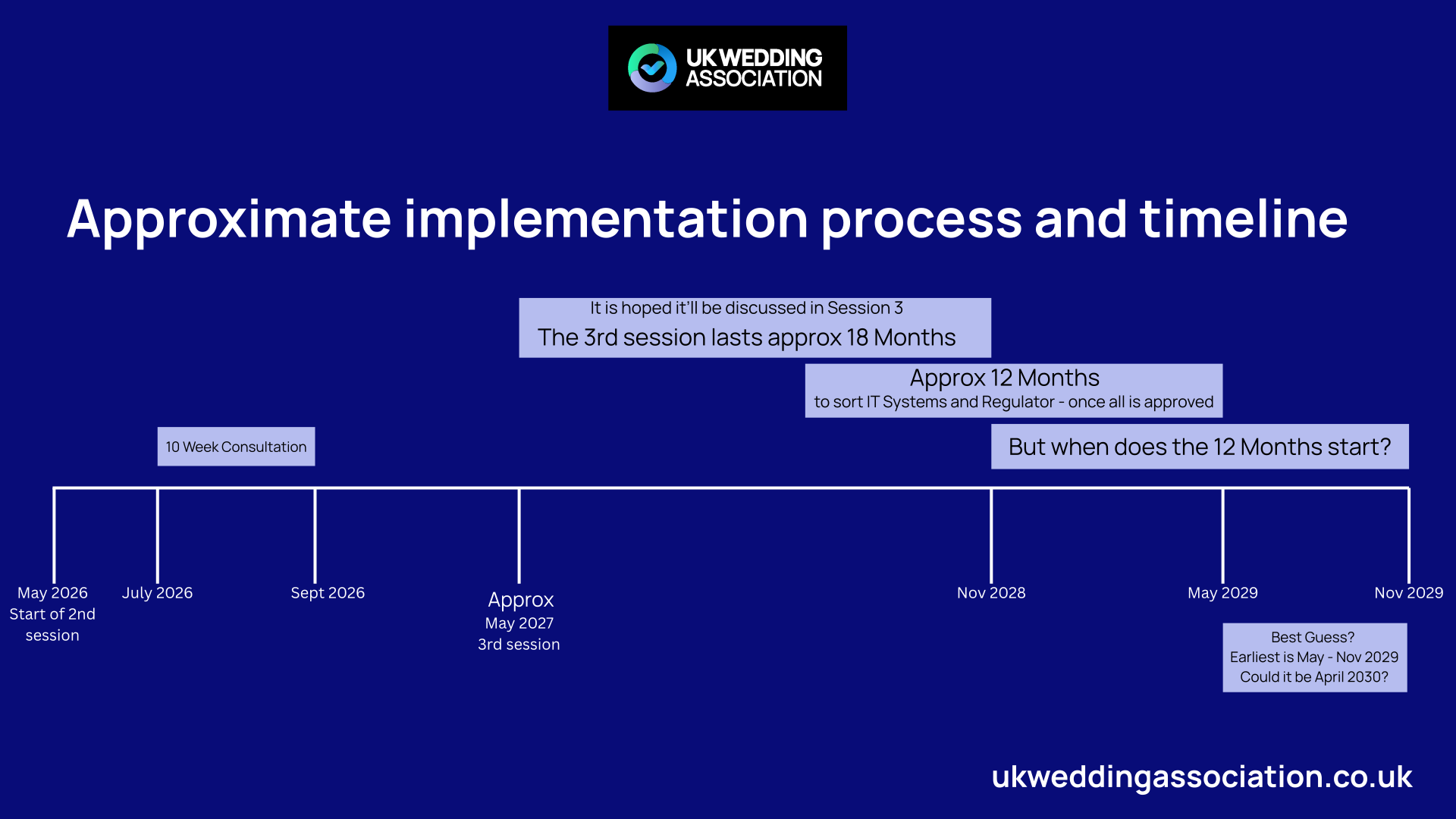
The reform wasn’t included in the parliamentary session beginning in May 2026. The current expectation is that legislation could be considered during the following (3rd) session, potentially from around May 2027. Once laws are passed, it’ll take approximately 12 months – but possibly more – to establish the regulatory and IT systems.
Terminology
To ensure consistent messaging, the round-table confirmed the terminology that should currently be used when discussing the proposed changes:
- Officiant – the umbrella term.
- Civil officiants – registration officers, independent officiants, maritime officiants.
- Registration officer – registrar or superintendent registrar. “Registered officiant” is not a defined term
- Independent officiant – neither state-appointed nor acting for a belief organisation.
- Belief officiants – Anglican clergy and nominated officiants.
- Nominated officiant -nominated by a religious or non-religious belief organisation.
- “Authorised” – used generally, not for any one category.
Q&A
Will couples still be able to access low-cost legal ceremonies?
Under the current system, couples can access a basic statutory marriage ceremony for £62, but availability can be extremely limited. The roundtable heard examples of local authorities offering as few as four statutory ceremonies per month, in part because a ceremony costing £62 can cost the authority around £200 to deliver.
It was also highlighted that these limited appointments are not always being used by the lower-income couples they were intended to support, with some instead booked by couples having a separate celebrant-led ceremony or destination wedding.
There was broad support for retaining an affordable, simple legal marriage option under any future system, although how this would work, who could provide it and what it would cost have not yet been decided.
Will existing celebrants have to retrain?
We don’t know yet. There was widespread agreement at the roundtable that anyone becoming an authorised officiant would need to demonstrate that they understand the legal and safeguarding aspects of the role. What has not been decided is whether an experienced celebrant would need to complete an entirely new qualification or simply complete additional legal training to demonstrate that they meet the required standard.
Will currently licensed wedding venues automatically become pre-authorised venues?
That cannot be assumed. The proposal being consulted on is for a new voluntary pre-authorisation system, with its own criteria, renewal period and potential for authorisation to be revoked. Existing venues may already be well placed to demonstrate that they meet the relevant safety and dignity standards, but the consultation does not currently say that today’s approved-premises licence would automatically transfer into the new system.
Will experienced celebrants have “grandfather rights”?
This was specifically raised during the roundtable and remains unanswered. Participants recognised that it could be disproportionate to ask someone who has been conducting ceremonies professionally for 10 or 15 years to repeat extensive training in skills they can already demonstrate. Portfolio assessment or another competence-based route was discussed as a possible solution, but no system has been agreed. Whatever approach is chosen would still need to demonstrate that experienced celebrants understand the new legal responsibilities of acting as an officiant – and that may involve training.
Will a current Level 3 or NOCN qualification automatically qualify a celebrant?
No current qualification can yet be guaranteed to do so. Existing qualifications were discussed at length at the roundtable, including concerns that some current course content would need updating, in addition to being adjusted to cover the legal responsibilities of the new system. A Level 3 qualification may ultimately contribute towards demonstrating competence, but it cannot currently be described as the qualification that will make someone an authorised officiant. There was support for avoiding unnecessary duplication of ceremony training, provided the same minimum legal and safeguarding standard applies to everyone undertaking the officiant role.
Will there be one compulsory training provider?
There is no indication from the discussions that everyone would necessarily have to complete an identical celebrancy course. A recurring idea at the roundtable was a common legal baseline, potentially covering areas such as consent, safeguarding, forced and sham marriage and the dignity framework, while allowing different organisations to continue offering broader celebrancy training in different styles. How this would be quality assured, and what role membership organisations or a central regulator would play, has not yet been determined.
How much will officiant training cost?
There is no agreed figure. The roundtable recognised that training has a real cost to deliver but also that the barrier to entry should not become so high that smaller or specialist celebrants are excluded. Participants discussed the importance of keeping any mandatory element proportionate and accessible, particularly if experienced professionals only need to complete additional legal modules rather than a complete celebrancy qualification.
Will officiants need ongoing CPD or regular reauthorisation?
This is still being considered. Roundtable participants were keen that legal knowledge should not become outdated, particularly where someone only conducts a small number of weddings each year, and ongoing CPD or refresher training was discussed. The Government consultation proposes monitoring authorised officiants and compliance with training requirements but is still seeking views on the final oversight model.
Who will decide whether someone is sufficiently trained to become an officiant?
That has not yet been finalised. The roundtable discussed a model where the central regulator establishes the required standard while recognised membership or nominating organisations take responsibility for assessing, training and monitoring individual officiants. The Government consultation is similarly exploring a model in which membership organisations could undertake some of these functions under regulatory oversight.
Will existing celebrant insurance be enough once someone becomes an officiant?
This is another area that will need to be reviewed once the final responsibilities are known. The roundtable highlighted that legal officiants may face risks that do not arise in the same way when delivering a purely symbolic ceremony, particularly if they have to make a decision that prevents a legal marriage from taking place. Celebrants and membership organisations will therefore need to check that professional indemnity and other cover reflects the eventual responsibilities of the role.
What support will an officiant have if something unexpected happens on the wedding day?
This was identified as an important gap during the roundtable. Registrars currently have access to colleagues, senior staff and the General Register Office when an unusual legal question arises. Participants felt that future independent officiants would also need access to reliable guidance when faced with a difficult decision, potentially outside normal office hours. Exactly who would provide that support and how it would operate has not yet been decided.
Will there be enough time to train and authorise officiants before the new law starts?
That will need to form part of the implementation planning. The roundtable specifically raised the risk of legislation being agreed before sufficient training and authorisation arrangements are ready. It was acknowledged that there would need to be time after legislation is passed to establish systems, prepare training and enable people to become authorised before the new framework could work effectively. This is another reason businesses should not assume that a change in the law would mean an overnight switch to the new system.
Additional resources
In July 2026, following the announcement of the proposed changes, UK Wedding Association Chair, Alison Hargreaves, moderated a panel of experts to discuss some of the implications of the proposed changes and areas still under consultation.
You can watch the original July 2026 webinar recording here:
Industry Voices
Following the launch of the consultation, the UK Wedding Association worked with PressBox PR, to gather views from wedding businesses across the industry. Members shared their experiences and perspectives on the proposed reforms, helping to ensure the industry’s voice is represented as the consultation progresses.
Here are some of the comments received:
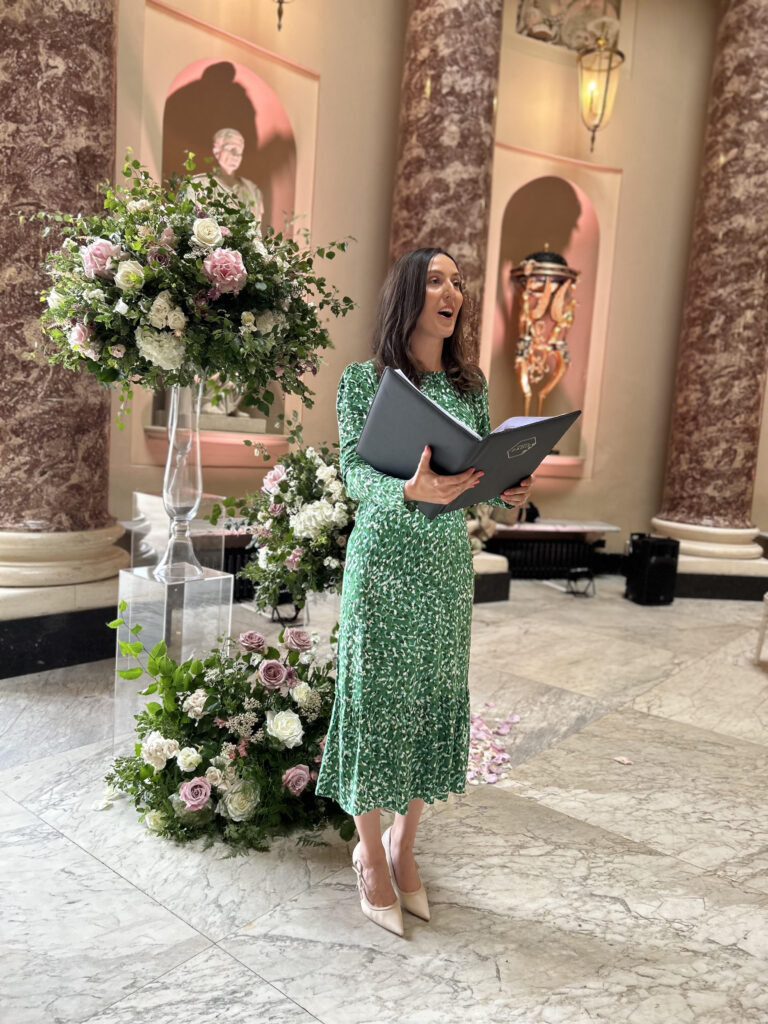
Zadie Ward
As a modern wedding celebrant working with couples across the UK, I’d like to speak about why these reforms matter beyond the wedding industry. We’re living in an experience era where people value connection, authenticity and shared moments more than ever before. Couples increasingly want a ceremony that reflects who they are, welcomes modern and blended families, celebrates different cultures and creates an experience that their guests genuinely feel part of. Yet the law still forces many couples to separate the legal act of getting married from the meaningful ceremony they actually want. I’d like to talk about how these reforms are less about changing marriage itself and more about giving couples informed choice, allowing one meaningful ceremony instead of two, and bringing the law into line with how people already choose to celebrate one of the biggest moments of their lives, while maintaining robust standards and accountability.

Jennifer Patrice
As wedding suppliers, we love that every couple is unique, but our current wedding laws don’t always allow them to celebrate their day in a way that truly reflects them. This consultation is a great opportunity for the law to be modernised, giving couples greater choice whilst preserving the significance, dignity and legal protections of marriage.

Vim Ziyambe
It’s a much bigger conversation about creating a modern, officiant-based system that gives couples greater choice while preserving the dignity, legal significance and safeguards that marriage deserves.
I genuinely believe I could offer a balanced and informed perspective because I’ve lived both sides of the profession. I understand the responsibilities and safeguards of the registration service, and I also spend every day working with engaged couples, hearing what they value most and where they find the current system frustrating.
More than anything, I think couples need someone who can explain these proposals in plain English. Many won’t even realise this consultation is happening or that they have the opportunity to influence the future of marriage law in England and Wales.
Sonal Dave
As an Independent Celebrant, who predominantly works with multicultural, interfaith, no religion, spiritual couples, the current marriage law means that they need to do the legal marriage, and then either have two cultural ceremonies or the one multicultural ceremony where I blend their cultures including rituals (both religious and non-religious), readings, their love story, personal vows, live music, and more. This means two ceremonies, extra cost and extra admin.
The consultation proposes changing the current regulation of a building where the wedding takes place to the Officiant conducting the wedding ceremony. The consultation has specifically proposed independent celebrants as one of the groups who could conduct legally binding weddings (that’s me).
If this happens, this means, that the ceremony I conduct for my couples could be the legal wedding
Couples can choose where they want to marry. From castles to boats, the place they had their first date or the proposal took place, as well as hotels, and other venues.

Jonny Bann
It’s a huge step forward for couples, giving them more freedom and flexibility over where they marry. But for venues that rely heavily on weddings as their primary source of income, this could be a wake-up call.
The most successful venues will be those that evolve, diversify and give couples a reason to choose them.
Be part of the conversation, join the UK Wedding Association today.



Comments 27
https://shorturl.fm/kXrzA
https://shorturl.fm/fByaU
https://shorturl.fm/Kv2Q4